
Sleep
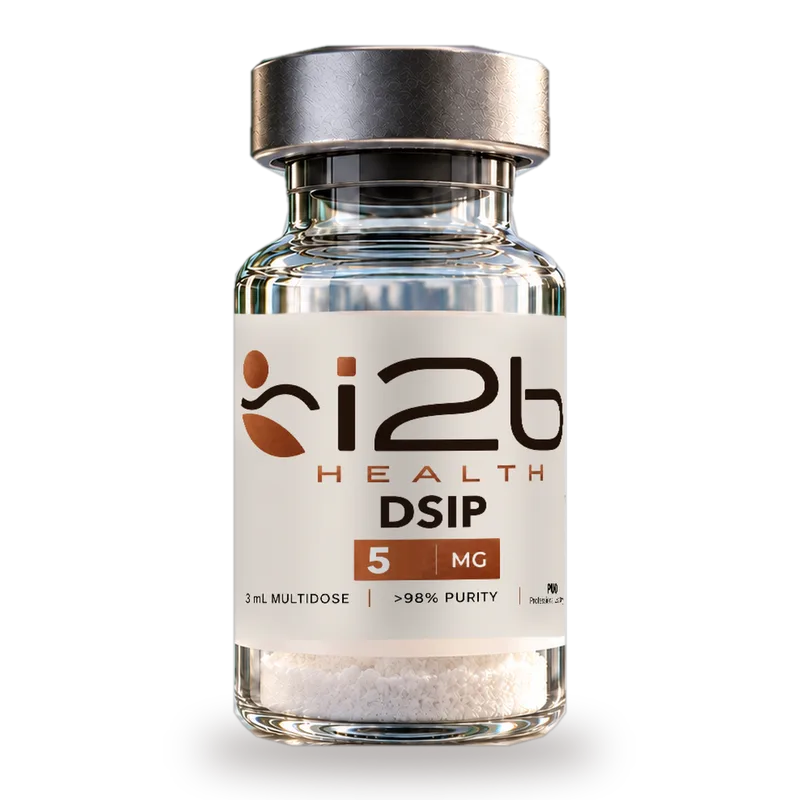
DSIP
15mg · 10mg · 5mg · not currently in stock
Delta Sleep Inducing Peptide studied for sleep architecture regulation, stress modulation, and circadian rhythm normalization.
Mechanism
Delta Sleep-Inducing Peptide (Trp-Ala-Gly-Gly-Asp-Ala-Ser-Gly-Glu) is a naturally occurring nonapeptide identified by Schoenenberger and Monnier in 1977. Despite its name, its effects on sleep are more nuanced than simple sleep induction. DSIP modulates sleep architecture by promoting delta wave (slow-wave) sleep patterns and normalizing disturbed sleep-wake cycles. Its mechanisms include modulation of GABA-ergic and glutamatergic signaling, reduction of corticotropin release during stress, and interaction with opioid systems. DSIP also influences LH release, somatostatin levels, and has been shown to have analgesic and antioxidant properties. It readily crosses the blood-brain barrier.
What the literature has looked at
- Studies have investigated sleep architecture normalization in insomnia research models
- Research has examined stress response modulation and cortisol regulation pathways
- Studies have explored analgesic properties and opioid system interactions
- Research has assessed neuroendocrine effects on LH and somatostatin signaling
Research context, not a claim about what this compound does. Research Use Only — not for human or animal consumption. 21+.
Cited work
Graf MV, Kastin AJ. Delta-sleep-inducing peptide (DSIP): a review. Neurosci Biobehav Rev. 1984;8(1):83-93.
Comprehensive review of DSIP pharmacology establishing its effects on sleep architecture, stress responses, and neuroendocrine function, while noting that its sleep-promoting effects are modulatory rather than hypnotic.
Mikhaleva II, et al. Interaction of delta sleep-inducing peptide and its analogues with cellular membranes: a structure-function analysis. Bioorg Khim. 2006;32(2):176-182.
Compared DSIP with synthetic analogues to identify which residues govern its interaction with cell membranes.
Properties
- type
- Peptide (nonapeptide)
Carries your code if you arrived with one — check the badge in the header.