
Growth Hormone
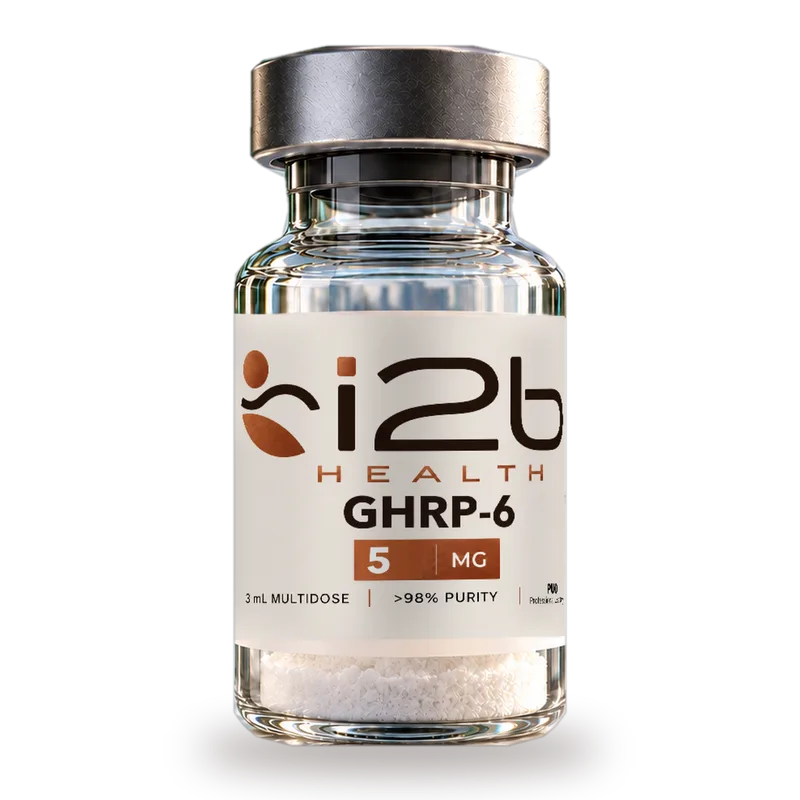
GHRP-6
5mg · 10mg · not currently in stock
Growth hormone releasing hexapeptide studied for GH secretion, ghrelin receptor activation, and appetite regulation.
Mechanism
GHRP-6 (Growth Hormone Releasing Peptide 6) is one of the earliest synthetic GH secretagogues discovered. It binds to the GHS-R1a receptor on pituitary somatotrophs and hypothalamic neurons, stimulating GH release and simultaneously suppressing somatostatin. Unlike GHRP-2, GHRP-6 produces a more pronounced increase in appetite through its ghrelin-mimetic activity, stimulating gastric acid secretion and gastric motility. It also produces more significant elevations in cortisol and prolactin compared to more selective GHRPs like ipamorelin. GHRP-6 has been studied for its cytoprotective effects on various tissues, including gastric mucosa.
What the literature has looked at
- Studies have investigated GH release and IGF-1 elevation in various research models
- Research has examined its appetite-stimulating properties and effects on gastric motility
- Studies have explored cytoprotective effects on gastric and hepatic tissue
- Research has examined its effects on cardiac function and myocardial signaling pathways
Research context, not a claim about what this compound does. Research Use Only — not for human or animal consumption. 21+.
Cited work
Bowers CY. Growth hormone-releasing peptide (GHRP). Cell Mol Life Sci. 1998;54(12):1316-1329.
Comprehensive characterization of GHRP-6 as a potent GH secretagogue with distinct pharmacological properties including appetite stimulation and cortisol/prolactin co-release.
Berlanga-Acosta J, et al. Synthetic growth hormone-releasing peptides (GHRPs): a historical appraisal of the evidence supporting their cytoprotective effects. Clin Med Insights Cardiol. 2017;11:1179546817694558.
Reviewed evidence for GHRP-6 cytoprotective signaling across multiple tissue types, including cardioprotective and hepatoprotective mechanisms in ischemia-reperfusion research models.
Properties
- type
- Peptide (hexapeptide)
Carries your code if you arrived with one — check the badge in the header.