
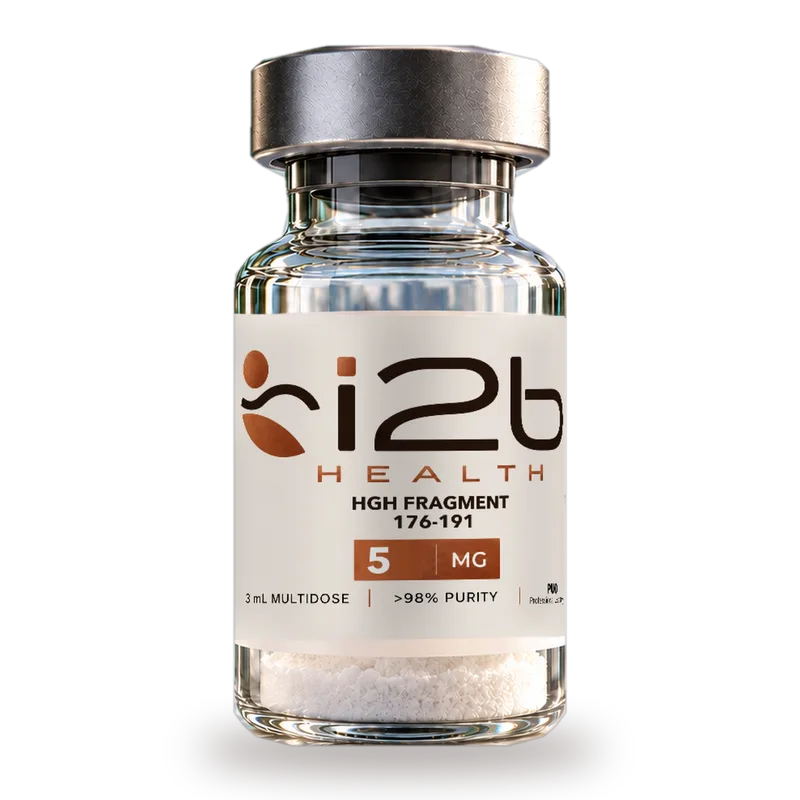
Growth Hormone
HGH Fragment 176-191
5mg · 10mg
C-terminal fragment of human growth hormone studied for lipolysis and fat metabolism without affecting insulin sensitivity.
Mechanism
HGH Fragment 176-191 is a stabilized analog of the C-terminal portion of human growth hormone. This region of the hGH molecule has been identified as responsible for the lipolytic activity of growth hormone. The fragment stimulates lipolysis through beta-adrenergic receptor pathways and inhibits de novo lipogenesis in adipose tissue. Importantly, it lacks the ability to bind to or activate the full growth hormone receptor, so it does not stimulate IGF-1 production, does not promote longitudinal bone growth, and does not produce the hyperglycemic effects associated with full-length GH administration.
What the literature has looked at
- Studies have investigated lipolytic activity independent of IGF-1 stimulation
- Research has examined effects on adipose tissue metabolism in preclinical models
- Studies have explored its lack of diabetogenic effects compared to full-length hGH
- Research has assessed cartilage regenerative potential
Research context, not a claim about what this compound does. Research Use Only — not for human or animal consumption. 21+.
Cited work
Heffernan MA, et al. Effects of oral administration of a synthetic fragment of human growth hormone on lipid metabolism. Am J Physiol Endocrinol Metab. 2000;279(3):E501-E507.
A synthetic C-terminal fragment of human growth hormone altered lipid metabolism in rodents after oral administration, separating the lipolytic activity of the fragment from the growth-promoting activity of the intact hormone.
Heffernan MA, et al. The effects of human GH and its lipolytic fragment (AOD9604) on lipid metabolism following chronic treatment in obese mice and beta-3 AR knock-out mice. Endocrinology. 2001;142(12):5182-5189.
Research confirmed that the hGH fragment modulates lipolytic signaling via beta-3 adrenergic receptors without stimulating IGF-1 or affecting carbohydrate metabolism pathways.
Properties
- type
- Peptide (hGH fragment)
Carries your code if you arrived with one — check the badge in the header.