
Reproductive
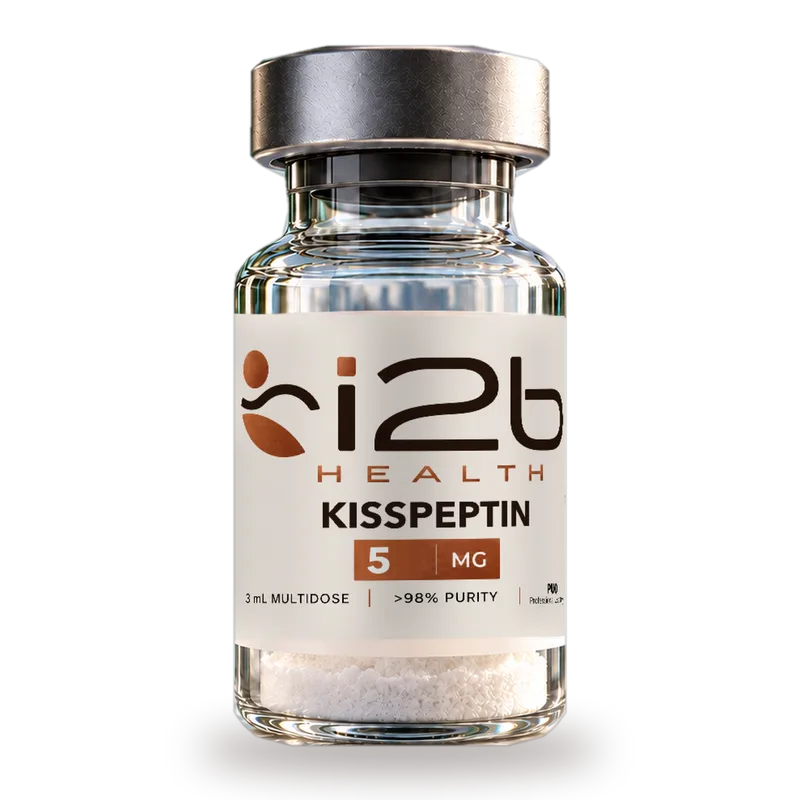
Kisspeptin
5mg · 10mg · not currently in stock
Neuropeptide studied for GnRH signaling, reproductive hormone regulation, and fertility research.
Mechanism
Kisspeptin is a family of peptides (kisspeptin-54, -14, -13, -10) derived from proteolytic cleavage of the KISS1 gene product. All forms share a common C-terminal decapeptide sequence that binds to and activates the kisspeptin receptor (KISS1R/GPR54) on GnRH neurons in the hypothalamus. This activation is the primary physiological trigger for pulsatile GnRH secretion, which in turn drives the pituitary release of luteinizing hormone (LH) and follicle-stimulating hormone (FSH). Kisspeptin integrates metabolic, stress, and photoperiod signals to coordinate reproductive function. Loss-of-function mutations in KISS1 or KISS1R cause hypogonadotropic hypogonadism.
What the literature has looked at
- Studies have investigated kisspeptin as a diagnostic tool for reproductive signaling pathway research
- Research has examined its effects on hypothalamic GnRH signaling in amenorrhea research models
- Studies have explored kisspeptin-mediated LH release mechanisms in reproductive research
- Research has assessed its role in puberty onset and reproductive endocrinology signaling
Research context, not a claim about what this compound does. Research Use Only — not for human or animal consumption. 21+.
Cited work
Dhillo WS, et al. Kisspeptin-54 stimulates the hypothalamic-pituitary gonadal axis in human males. J Clin Endocrinol Metab. 2005;90(12):6609-6615.
Research investigated kisspeptin-54-mediated activation of the hypothalamic-pituitary-gonadal signaling axis, observing potent and dose-dependent modulation of LH and FSH release pathways.
Abbara A, et al. Efficacy of kisspeptin-54 to trigger oocyte maturation in women at high risk of ovarian hyperstimulation syndrome (OHSS) during in vitro fertilization (IVF) therapy. J Clin Endocrinol Metab. 2015;100(9):3322-3331.
Research examined kisspeptin-54-mediated oocyte maturation signaling in IVF research subjects, with observations of a more favorable ovarian hyperstimulation risk profile compared to hCG-based approaches.
Properties
- type
- Peptide (neuropeptide, 10-54 amino acids)
Carries your code if you arrived with one — check the badge in the header.