
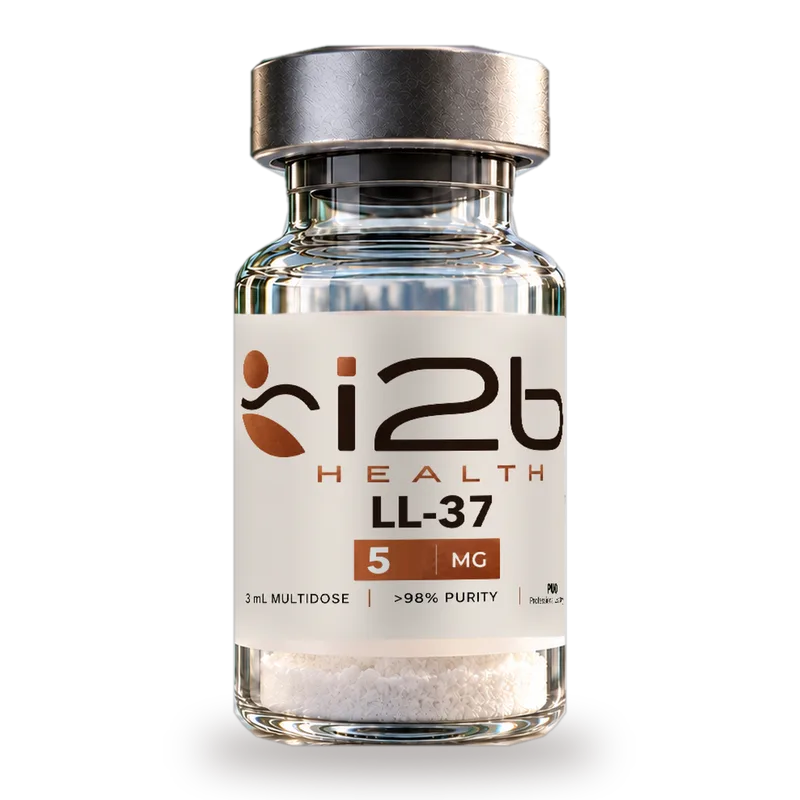
Immune Support
LL-37
5mg · 10mg
Human cathelicidin antimicrobial peptide studied for broad-spectrum pathogen defense, immune modulation, and wound healing.
Mechanism
LL-37 is a 37-amino acid amphipathic, alpha-helical peptide derived from the C-terminal cleavage of the human cathelicidin precursor protein hCAP18 by proteinase 3. It is expressed by neutrophils, macrophages, epithelial cells, and other cell types at barrier surfaces. LL-37 disrupts bacterial membranes through electrostatic interaction with negatively charged phospholipids, forming transmembrane pores. Beyond direct antimicrobial killing, LL-37 modulates immune responses by promoting chemotaxis of immune cells, neutralizing lipopolysaccharide (LPS), stimulating angiogenesis and tissue repair signaling, and modulating dendritic cell differentiation. It bridges innate and adaptive immunity.
What the literature has looked at
- Studies have investigated broad-spectrum antimicrobial activity against bacteria, fungi, and viruses
- Research has examined immunomodulatory effects and chemotaxis promotion
- Studies have explored tissue repair signaling and angiogenesis stimulation mechanisms
- Research has assessed biofilm disruption and synergy with conventional antibiotics
Research context, not a claim about what this compound does. Research Use Only — not for human or animal consumption. 21+.
Cited work
Vandamme D, et al. A comprehensive summary of LL-37, the factotum human cathelicidin peptide. Cell Immunol. 2012;280(1):22-35.
Comprehensive review documenting LL-37's multifunctional roles in antimicrobial defense, immune modulation, tissue repair signaling, and cancer biology, establishing it as a central mediator of innate immunity.
Heilborn JD, et al. The cathelicidin anti-microbial peptide LL-37 is involved in re-epithelialization of human skin wounds and is lacking in chronic ulcer epithelium. J Invest Dermatol. 2003;120(3):379-389.
LL-37 was found to be upregulated during acute tissue repair signaling and deficient in chronic non-healing conditions, directly demonstrating its role in re-epithelialization mechanisms.
Properties
- type
- Peptide (37 amino acids, cathelicidin)
Carries your code if you arrived with one — check the badge in the header.