
Weight Management
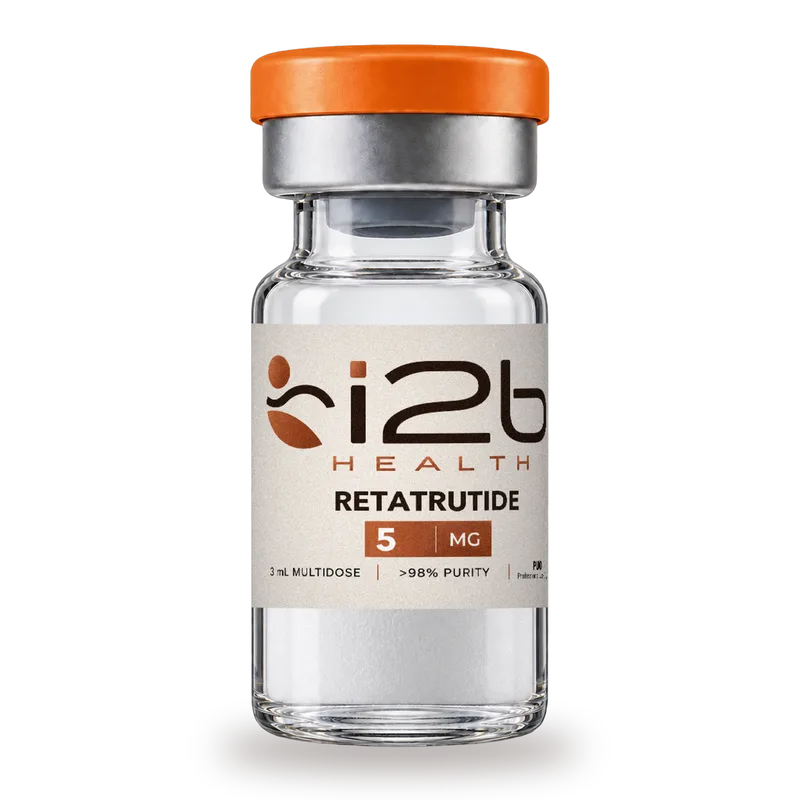
Retatrutide
60mg · 10mg · 20mg · 50mg · 30mg · 5mg
Triple agonist (GLP-1, GIP, glucagon) investigated for weight management and metabolic health.
Mechanism
Retatrutide is a single-molecule triple agonist that simultaneously activates glucose-dependent insulinotropic polypeptide (GIP), glucagon-like peptide-1 (GLP-1), and glucagon receptors. GLP-1 receptor activation modulates satiety signaling, gastric emptying kinetics, and glucose-dependent insulin secretion. GIP receptor agonism complements GLP-1 effects on satiety pathways and may modulate lipid metabolism. Glucagon receptor activation increases hepatic energy expenditure and fat oxidation, contributing an additional mechanism for metabolic pathway modulation beyond satiety signaling alone. This tripartite approach engages multiple metabolic signaling pathways simultaneously.
What the literature has looked at
- Studies have investigated dose-dependent effects on metabolic signaling pathways
- Studies have examined effects on glycemic markers in metabolic research models
- Research has explored the contribution of glucagon receptor agonism to metabolic pathway modulation
- Research has assessed hepatic lipid metabolism and cardiovascular biomarkers
Research context, not a claim about what this compound does. Research Use Only — not for human or animal consumption. 21+.
Cited work
Jastreboff AM, et al. Triple-hormone-receptor agonist retatrutide for obesity — a phase 2 trial. N Engl J Med. 2023;389(6):514-526.
Research investigated the dose-dependent pharmacology of triple incretin-glucagon receptor agonism and its effects on metabolic signaling pathways across multiple dose groups over 48 weeks.
Rosenstock J, et al. Retatrutide, a GIP, GLP-1 and glucagon receptor agonist, for people with type 2 diabetes: a randomised, double-blind, placebo and active-comparator controlled, parallel-group, phase 2 trial. Lancet. 2023;402(10401):529-544.
Research examined the effects of triple receptor agonism on glycemic signaling pathways and metabolic parameters, comparing its receptor pharmacology profile to single-agonist approaches.
Carries your code if you arrived with one — check the badge in the header.