
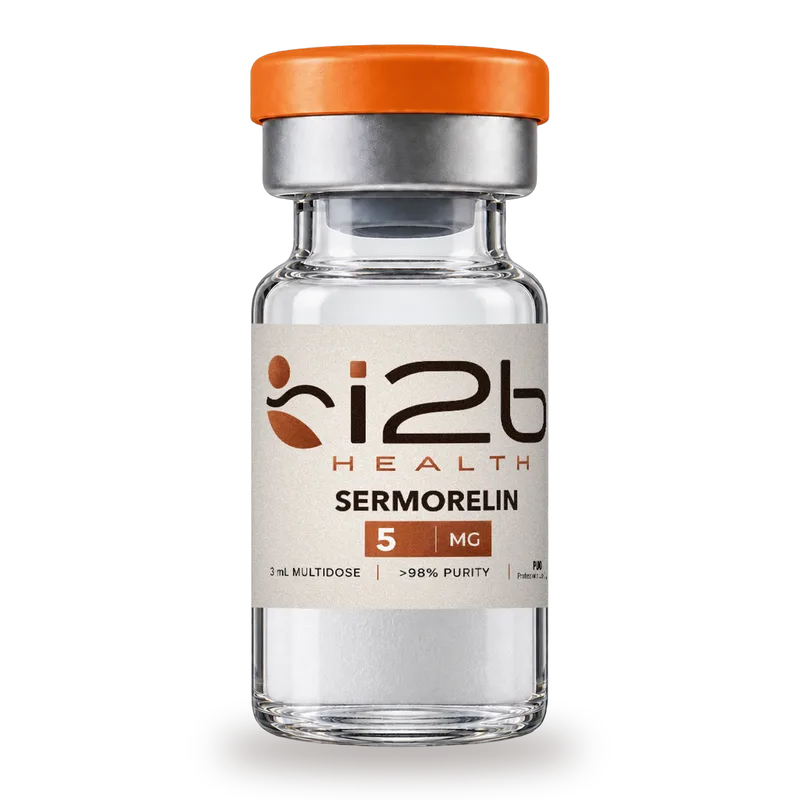
Growth Hormone
Sermorelin
5mg · 10mg · not currently in stock
Synthetic GHRH analogue studied for GH stimulation and age-related decline.
Mechanism
Sermorelin (GRF 1-29 NH2) is identical to the first 29 amino acids of endogenous 44-amino acid GHRH, which is the minimal fragment required for full biological activity at the GHRH receptor. It binds to and activates the GHRH receptor (GHRH-R) on anterior pituitary somatotrophs, stimulating the synthesis and pulsatile release of endogenous growth hormone. Because it works through the physiological GHRH pathway, it maintains the normal regulatory feedback mechanisms of the GH axis, including somatostatin-mediated suppression. This preserves the natural pulsatile pattern of GH secretion.
What the literature has looked at
- Studies have investigated diagnostic evaluation of pituitary GH secretory capacity
- Research has examined its use in age-related GH decline models
- Studies have explored its effects on sleep architecture, body composition, and immune signaling
- Research has characterized physiological GHRH receptor activation dynamics
Research context, not a claim about what this compound does. Research Use Only — not for human or animal consumption. 21+.
Cited work
Walker RF. Sermorelin: a better approach to management of adult-onset growth hormone insufficiency? Clin Interv Aging. 2006;1(4):307-308.
Reviewed evidence supporting sermorelin as a physiological approach to modulating GH secretion pathways, noting its preservation of normal feedback regulation.
Vittone J, et al. Effects of single nightly injections of growth hormone-releasing hormone (GHRH 1-29) in healthy elderly men. Metabolism. 1997;46(1):89-96.
Research investigated GHRH(1-29)-mediated effects on GH signaling pathways over six months, observing modulation of IGF-1 levels and body composition parameters with no significant adverse effects.
Properties
- type
- Peptide (GHRH 1-29 analog)
Carries your code if you arrived with one — check the badge in the header.